
If you’ve ever typed dentist near me at night because something felt “off” — a tooth that keeps chipping, a crown that doesn’t feel right anymore, a smile you avoid in photos — you already know the hardest part isn’t the search. It’s figuring out who can actually take a problem from diagnosis to finish without bouncing you between offices, labs, and vague timelines.
In Millburn and the nearby Essex County towns, more patients are asking for dentistry that works like a coordinated project. Not ten separate mini-visits scattered across months, but a clear sequence: scan, plan, treat, restore — with the same team staying accountable from start to end. That expectation is one reason practices that combine advanced imaging, restorative dentistry, cosmetic work, and implant planning in one location are getting more attention.
Arthur Greyf, DDS, FICOI Implant, Cosmetic & Laser Dentistry in Millburn positions itself around exactly that kind of continuity — especially for people who don’t want to “start over” every time a case gets complex. The office is on Essex Street in Millburn, and the practice highlights a tech-forward workflow that’s meant to reduce guesswork and shorten decision cycles: digital imaging, in-house design and milling options, and implant planning that’s built around modern diagnostics.
What matters to a patient, though, is simpler than the equipment list: do you feel like someone is driving the process, or are you left stitching together advice from three different places?
The quiet difference between “a dentist” and a dental home
A lot of dental websites talk about “comprehensive care.” In reality, comprehensive care usually means one of two things:
Some offices do a wide menu of basics but refer the harder pieces out. Others build a workflow where restorative, cosmetic, and implant decisions are made together — because one choice affects the next. A veneer plan changes bite forces. Implant placement changes how a final crown sits. Even a “simple” crown can turn into something more if the underlying tooth structure is weak.
That’s why patients tend to feel calmer when the office can keep the entire chain of decisions in one place, especially for cases involving implants, rebuilding worn teeth, or cosmetic upgrades that still have to function naturally.
On the Millburn site, the practice frames its services as integrated rather than separate: implants and bone grafting on one side, crowns/bridges and restorative work in the middle, cosmetic dentistry and smile improvements as a finishing layer — but planned from the beginning, not treated like a last-minute add-on.
Why implants are part of so many conversations now
Implants aren’t a niche topic anymore. They come up because tooth loss and severe tooth damage are more common than people assume, and because expectations are higher. Patients don’t just want “a removable thing that kind of works.” They want stability.
The CDC reports that more than 1 in 7 adults age 65+ have lost all their teeth, and about 26% have severe tooth loss (8 or fewer teeth). Even when those numbers don’t describe someone personally, they reflect what families see up close: a parent who stops eating certain foods, someone who avoids social events, a person who keeps delaying care until it’s suddenly urgent.
The best implant experiences tend to have two things in common:
A plan that’s based on precise imaging, not guesswork.
A restorative end-goal that’s decided first — because the final tooth shape and bite are what make an implant feel “real.”
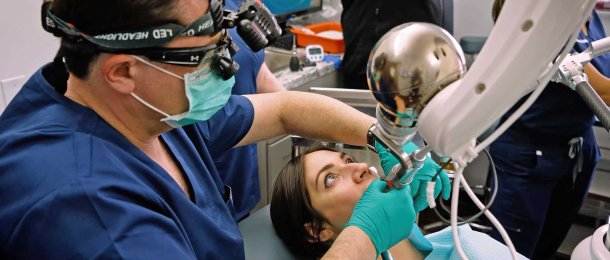
The dental implants page for the practice emphasizes robotic implant planning and a minimally invasive approach, aiming for precision and faster healing where appropriate.
Cosmetic dentistry that doesn’t look like “cosmetic dentistry”
A lot of people want cosmetic upgrades but hate the idea of looking artificial. They want brighter teeth, cleaner edges, better symmetry — without a “new face” effect.
The best cosmetic work usually starts with small questions:
Is the color the real issue, or is it shape?
Are teeth short because of wear?
Is a gummy smile the problem, or is the tooth proportion off?
Is alignment the root cause, or is it just one tooth that’s rotated?
Cosmetic dentistry can be subtle or transformative, but it should still feel like your smile. The practice’s cosmetic dentistry content leans into that “tailored” positioning — from smaller enhancements to fuller smile changes — while still tying those decisions back to function.
And that’s where modern imaging matters again: when a patient can actually see what’s happening, the conversation gets calmer. No mystery. No “trust me.” Just a shared picture of the problem and the options.
A team matters more than the equipment list
Technology can speed up steps, but it doesn’t replace communication. In dentistry, communication is often what determines whether a patient finishes a treatment plan or disappears halfway through.
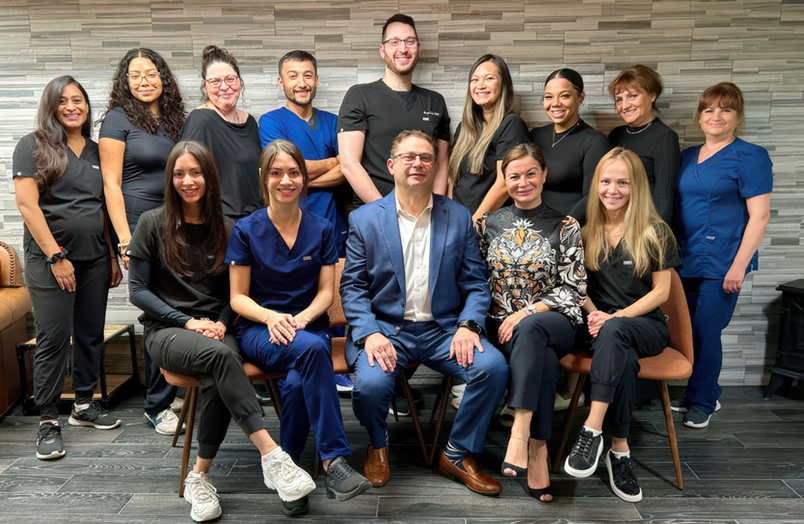
The “Meet the Team” page highlights staff backgrounds that are built around easing stress and helping patients feel oriented from the first interaction — including an office manager who has worked alongside Dr. Greyf for years and team members described as especially supportive for nervous patients.
That kind of continuity shows up in how people describe the experience on review platforms. On Yelp, one of the repeated themes in review highlights is the feeling of being in control of the plan — not rushed, not pressured, not treated like a number. On Zocdoc, reviewers rate Dr. Greyf at 5/5 overall, including full marks for wait time and bedside manner.
You can’t build that reputation with gadgets. It comes from the way an office runs its day: how they explain choices, how they handle fear, how they respond when a case is more complicated than expected.
What patients should look for before committing to a big plan
If you’re considering implants, a full-arch option, or a cosmetic rebuild that goes beyond whitening, it’s worth checking a few practical things before you commit.
Clear diagnostics
If an office talks about 3D imaging and digital planning, ask what that changes for your case. The goal isn’t buzzwords — it’s clarity.
One place, one timeline
If you’re sent out for scans, sent out for surgery, and sent out for the final crown, timelines can stretch. A coordinated workflow usually reduces the “dead weeks.”
A restorative end-goal
Ask what the final result is supposed to look and feel like. A strong plan starts with function and ends with aesthetics, not the other way around.
Comfort options that are actually explained
A calm appointment isn’t just “nice.” It makes it easier for people to follow through, especially if the plan has multiple steps.
The Millburn practice frames its approach around exactly those themes — planning, precision, and reducing the friction that turns dental care into a long, stressful project.
A simple takeaway for anyone searching in Millburn
Most people don’t want “the best dentist in the world.” They want the right fit for their actual problem — with a team that explains clearly, plans carefully, and can carry the case through without chaos.
If you’re in Millburn, Short Hills, Maplewood, or nearby and you’re trying to move from uncertainty to a real plan — especially for implants, restorative work, or cosmetic upgrades that still need to function naturally — you can start by learning more about the practice here: https://dentist-millburn.com/