
Difference Between Temporary and Permanent Dental Implants
If you are researching the difference between temporary and permanent dental implants, one important point can make the terminology much easier to understand: in many cases, the words “temporary” and “permanent” refer to the tooth or restoration attached to an implant, rather than two completely different types of implant posts.
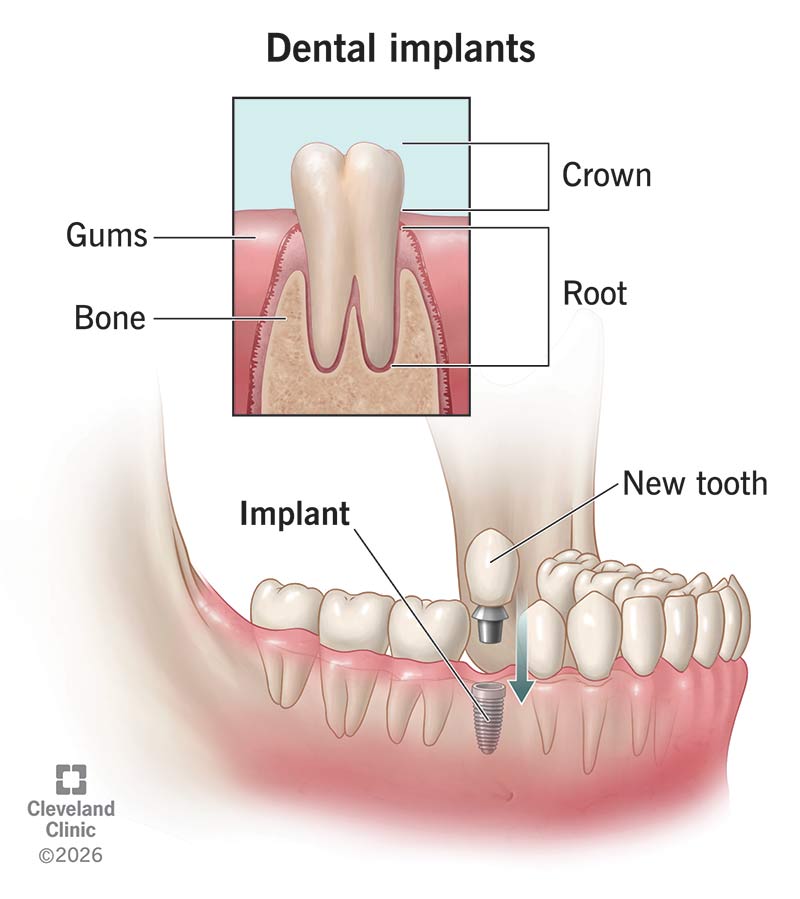
A dental implant is a small post placed into the jawbone to replace the root of a missing tooth. After the implant heals and integrates with the surrounding bone, a dentist can attach an abutment and a final restoration such as a crown, bridge or denture.
During the healing period, some patients receive a temporary tooth or temporary prosthesis. This allows them to have a visible tooth replacement while the implant heals. The final restoration is placed after the dentist determines that healing and integration are sufficient.
What Is a Dental Implant?
A dental implant replaces the root portion of a missing tooth. It is usually a threaded post made from titanium, although ceramic implants are also available. The implant is surgically placed into the jawbone and eventually becomes integrated with the surrounding bone through a process called osseointegration.
A typical implant restoration has three major components: the implant post, the abutment and the visible restoration. The implant functions as the artificial tooth root, the abutment connects the implant to the restoration, and the restoration is the artificial tooth or teeth that you can see and use.
This is why asking whether an implant is “temporary” or “permanent” can sometimes cause confusion. Your dentist may be discussing the temporary crown, temporary bridge or temporary denture rather than the implant fixture itself.
What Is a Temporary Dental Implant Tooth?
A temporary tooth is a provisional restoration used while your mouth heals. For example, if an implant is placed near the front of your mouth, your dentist may provide a temporary tooth so you do not have to remain without a visible tooth during recovery.
Depending on the treatment plan, a temporary restoration may be designed to maintain appearance and provide limited function while the underlying implant becomes stable. It is not necessarily the final shape, material or design that you will receive after healing.
In full-arch treatment, a temporary implant-supported or healing prosthesis may also be used while multiple implants integrate with the jawbone. The exact design depends on the patient's anatomy, number of implants, surgical approach and dentist's treatment plan.
What Is a Permanent Dental Implant Restoration?
The permanent or final restoration is the tooth replacement intended for long-term use after the implant has healed sufficiently. For a single missing tooth, this is commonly a crown attached to the implant through an abutment. For multiple missing teeth, implants may support a bridge, while multiple implants can also support a full-arch denture.
The final restoration is custom-made for the patient's mouth. Your dentist and dental laboratory may consider the size and shape of the surrounding teeth, bite, position of the implant and appearance of the smile when designing the restoration.
Although commonly called “permanent,” the final crown, bridge or denture is not necessarily guaranteed to last forever. The implant itself can potentially last a lifetime with appropriate care, while the restoration may eventually need repair or replacement.
Temporary vs. Permanent Dental Implants: Key Differences
| Feature | Temporary Restoration | Final Restoration |
|---|---|---|
| Purpose | Used during healing and treatment | Designed for long-term use |
| Timing | Usually used before final healing | Placed after the implant has adequately healed |
| Design | Provisional design | Customized final design |
| Durability | Designed for the treatment period | Designed for long-term function |
| Replacement | Normally replaced by the final restoration | May eventually require repair or replacement |
| Implant post | The implant post itself is intended as the long-term foundation of treatment. | |
How Long Do Temporary Dental Implants Last?
There is no single temporary-implant timeline that applies to everyone. The duration depends on the patient's healing, the location of the implant, whether bone grafting was necessary, the type of restoration and the dentist's treatment plan.
The underlying implant generally needs time to integrate with the jawbone before the final restoration is attached. Cleveland Clinic notes that osseointegration can take approximately three to nine months, depending on how quickly the individual heals.
In some situations, a temporary tooth may be used throughout part of this period. In other cases, a temporary restoration may not be necessary. For implants placed toward the back of the mouth, for example, a dentist may decide that a temporary tooth is unnecessary.
How Long Does It Take to Get the Permanent Restoration?
The overall treatment timeline varies significantly from person to person. Dental implant treatment may involve tooth extraction, bone grafting, implant placement, healing, impressions or digital scans, and final restoration placement.
Cleveland Clinic reports that the implant itself may require several months to integrate with the jawbone. Once healing is adequate, the dentist can attach the abutment and final restoration.
If bone grafting is needed because there is insufficient bone to support the implant, treatment can take longer. The exact timeline should therefore come from your dentist or oral surgeon after evaluating your bone, gums, overall oral health and treatment plan.
Can You Eat With a Temporary Dental Implant?
Whether you can eat normally with a temporary restoration depends on its design and your dentist's instructions. A temporary restoration may provide some function, but it should not automatically be treated as equivalent to the final restoration.
During implant healing, your dentist may recommend dietary modifications to avoid placing excessive forces on the surgical area. Following those instructions is important because the implant needs time to integrate with the surrounding bone.
Do not assume that because a temporary tooth looks and feels natural, it is ready for every type of chewing. Your dental provider can tell you when and how you can use it safely.
Why Do Dentists Use Temporary Restorations?
Temporary restorations can serve several purposes during implant treatment. They may help maintain appearance, provide a tooth replacement during healing and allow the dentist to evaluate the developing restoration before the final prosthesis is completed.
For front teeth, appearance can be especially important because a missing tooth may be noticeable during everyday activities. Cleveland Clinic specifically notes that a temporary tooth may be made when an implant is near the front of the mouth so the patient does not have to remain with a visible gap while recovering.
In other cases, especially where appearance is less of a concern or where the temporary appliance could interfere with healing, the dentist may recommend a different approach.
Is the Permanent Restoration Stronger Than the Temporary One?
Generally, the final restoration is designed for long-term function, whereas a temporary restoration is designed for a limited treatment period. However, the exact strength and material of either restoration depends on the specific case.
Your dentist may select different materials and designs depending on whether the restoration replaces one tooth, several teeth or an entire dental arch.
It is also important to remember that the strength of the visible tooth is only one part of implant treatment. The health of the gums and surrounding bone, the stability of the implant, the fit of the restoration and oral hygiene all matter for long-term results.
Temporary Implant vs. Permanent Implant: Which Is Better?
It is usually not accurate to think of temporary and permanent restorations as competing choices. They are often different stages of the same treatment.
The temporary restoration helps during the healing period, while the final restoration is intended to provide the long-term tooth replacement. Your dentist may recommend both at different points in treatment.
The right approach depends on factors such as implant location, bone quality, gum health, bite, number of missing teeth, cosmetic requirements and whether additional procedures such as bone grafting are needed.
What Happens After the Implant Heals?
Once the implant has adequately integrated with the jawbone, your dentist can move forward with the next stage of restoration. This may involve placing or exposing the abutment, taking dental impressions or digital scans, and creating the final crown, bridge or denture.
Cleveland Clinic explains that after the implant heals, the abutment and final restoration can be attached. The final restoration may be a crown, bridge or denture depending on the number of teeth being replaced.
In some treatment plans, a second minor procedure may be needed to place the abutment. Your provider will explain whether this applies to your situation.
How Long Do Permanent Dental Implants Last?
The implant component is designed to be a long-term tooth-replacement solution. With appropriate oral hygiene and regular dental care, dental implants can often last a lifetime.
However, the restoration attached to the implant has a different lifespan. Cleveland Clinic notes that many crowns and bridges last around 15 years, while dentures may last at least seven years, although individual results vary.
This is another reason the phrase “permanent dental implant” can be misleading. The implant post and the visible restoration are separate components, and they may not have the same expected lifespan.
What Can Affect Dental Implant Healing?
Healing varies between patients. Your dentist or oral surgeon will consider your oral health, available bone, gum condition and other factors before recommending treatment.
Bone grafting may be required when there is not enough jawbone to adequately support an implant. In those situations, additional healing time may be needed before or during implant treatment.
Smoking or vaping can also interfere with healing, according to Cleveland Clinic. Your dental provider should review your individual risks and give you personalized instructions before and after implant surgery.
Temporary and Permanent Implant Costs
The total cost of implant treatment can vary considerably. It may include the implant procedure, consultations, imaging, extraction, bone grafting if needed, temporary restoration, abutment and final crown, bridge or denture.
Because treatment plans differ, there is no single price that applies to everyone. Ask your dental provider for a written treatment estimate that identifies which components are included.
If insurance or financing is involved, ask whether temporary restorations, implant surgery, the abutment and final restoration are covered separately. Coverage can vary considerably by plan.
Questions to Ask Your Dentist
- Will I need a temporary tooth or restoration?
- How long will I need to wear the temporary restoration?
- When will my implant be ready for the final restoration?
- Will I need a bone graft?
- What type of final restoration will I receive?
- What foods should I avoid during healing?
- What is included in the total treatment cost?
- How should I clean around the implant and restoration?
- What symptoms should prompt me to contact the dental office?
When Should You Contact Your Dentist?
Some discomfort and swelling can occur after dental implant surgery, and the expected recovery varies by procedure. Cleveland Clinic notes that many people feel like themselves within about a week after implant placement, although the implant continues integrating with the jawbone for several months.
Contact your dental provider if you are concerned about your healing or if you develop symptoms that your provider has told you require evaluation. Your dentist can determine whether your recovery is progressing normally.
Final Thoughts on the Difference Between Temporary and Permanent Dental Implants
Understanding the difference between temporary and permanent dental implants becomes easier when you separate the implant post from the restoration placed on top of it.
The implant is the artificial tooth root placed into the jawbone. A temporary tooth or prosthesis may be used while the implant heals and integrates with the bone. Once healing is adequate, the dentist can place the final crown, bridge or denture.
The temporary restoration is therefore generally a transitional part of treatment, while the final restoration is designed for long-term use. The implant itself is also intended as a long-term foundation, but the visible restoration may eventually require maintenance, repair or replacement.
Because every implant case is different, your dentist or oral surgeon should determine which temporary and final restoration is appropriate for you. Ask about the expected timeline, materials, eating restrictions, maintenance, risks and total cost before starting treatment.
Frequently Asked Questions
What is the main difference between temporary and permanent dental implants?
In many cases, “temporary” refers to a provisional tooth or restoration used during healing, while “permanent” refers to the final crown, bridge or denture intended for long-term use. The implant post itself is designed as a long-term foundation.
How long do temporary dental implants last?
The temporary restoration may be used for part or all of the healing period. The exact duration varies according to implant location, healing, bone grafting and the treatment plan.
How long does it take for a dental implant to heal?
Osseointegration commonly takes several months. Cleveland Clinic reports a range of approximately three to nine months, depending on how quickly the individual heals.
Is a permanent dental implant really permanent?
The implant post is intended as a long-term solution and can potentially last a lifetime with appropriate care. The crown, bridge or denture attached to it may eventually require repair or replacement.
Can you eat with a temporary implant tooth?
Your dentist will determine what you can safely eat based on your restoration and healing stage. Temporary restorations should not automatically be treated like fully healed final teeth.
Do all dental implant patients need a temporary tooth?
No. Some patients receive temporary teeth, while others may not need one. The decision depends on the location of the implant and the individual treatment plan.