
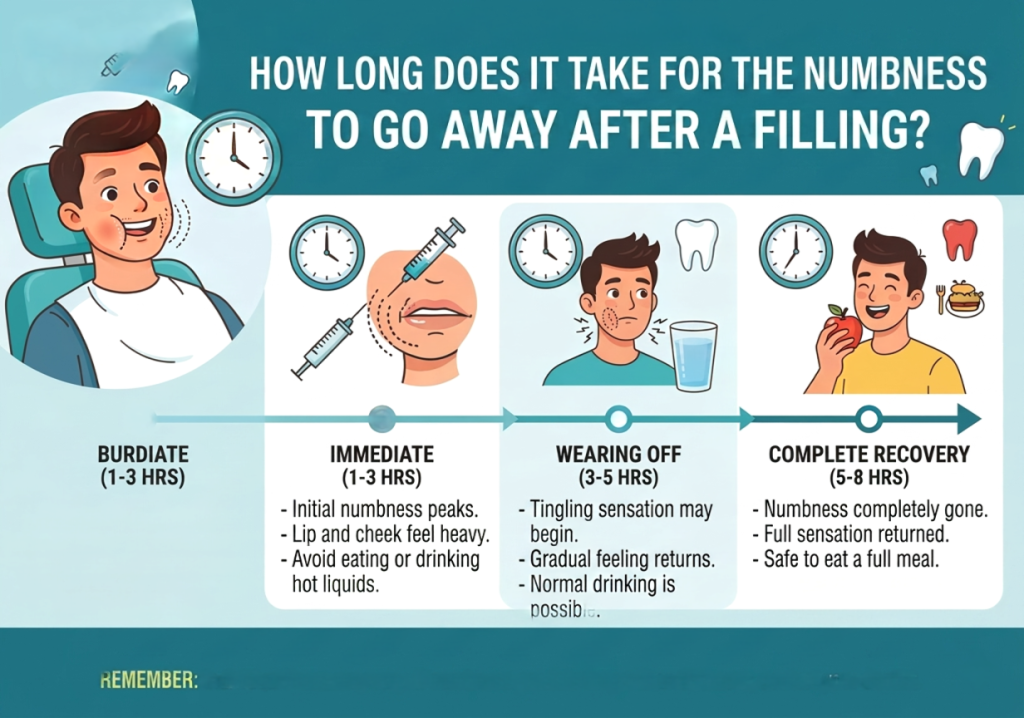
How Long Does It Take for the Numbness to Go Away After a Filling?
After a dental filling, numbness usually wears off within a few hours. The exact time can vary depending on the local anesthetic used, where the injection was given, how much anesthetic was needed, and the type and location of the filling. Some people regain normal sensation sooner, while others may remain numb for several hours.
If your mouth, lip, cheek, tongue, or jaw still feels numb after a filling, it can be uncomfortable and sometimes worrying. In most cases, this temporary numbness is simply the effect of the local anesthetic used to keep you comfortable during dental treatment. Local anesthetics work by temporarily blocking nerve signals that carry pain sensations.
The important thing to remember is that there is no single number of minutes or hours that applies to everyone. The numbness may begin to fade gradually, often with a tingling or “pins and needles” sensation, before normal feeling returns.
How Long Does Numbness Last After a Filling?
For many patients, dental numbness lasts for a few hours after the filling is completed. The area treated may start feeling different before the numbness completely disappears. You may notice tingling, mild sensitivity, or a gradual return of normal movement in your lip, cheek, tongue, or other nearby tissues.
The duration can differ because dentists use different local anesthetics and techniques depending on the tooth being treated and the procedure. Some local anesthetic effects can last around two to three hours, while other situations may result in numbness that lasts several hours. :contentReference[oaicite:1]{index=1}
| What can affect numbness? | Why it matters |
|---|---|
| Type of local anesthetic | Different anesthetics can have different durations of effect. |
| Location of the filling | The injection technique and nerves involved can influence how long surrounding tissues remain numb. |
| Upper vs. lower tooth | Different injection techniques may be used depending on the tooth being treated. |
| Amount of anesthetic used | The amount needed varies according to the procedure and the patient's circumstances. |
| Individual response | People can experience different durations even after similar dental procedures. |
Why Is My Mouth Still Numb After a Filling?
Your mouth may still feel numb because the local anesthetic has not completely worn off. This is especially noticeable when the anesthetic affects soft tissues such as the lip, cheek, or tongue. The tooth itself may begin feeling normal while nearby soft tissue remains numb for longer.
Lower-jaw dental treatment can also involve a nerve block that affects a larger area. As a result, numbness may be noticed in the lower lip, chin, tongue, or cheek in addition to the tooth that was treated.
A gradual change from complete numbness to tingling or partial sensation is generally consistent with the anesthetic wearing off. Local anesthetics commonly produce tingling or similar sensations as their effects decrease. :contentReference[oaicite:2]{index=2}
How Long Will My Mouth Be Numb After a Filling?
There is no exact timetable for every patient. In many routine situations, mouth numbness improves over a few hours. Some dental procedures may leave soft tissues numb for longer than the treated tooth itself.
If your dentist gave you specific aftercare instructions, follow those instructions because your dentist knows which anesthetic and injection technique were used.
How Long Does Cavity Filling Numbing Last?
Cavity filling numbness is caused by the local anesthetic used before the dentist works on the tooth. The anesthetic temporarily prevents pain signals from reaching the brain, allowing the filling procedure to be completed more comfortably.
The numbness does not necessarily disappear immediately when the filling is finished. It can continue for a few hours while the anesthetic gradually wears off. The duration depends on the anesthetic, the injection site, and the dental procedure.
When Does Numbing Wear Off After a Filling?
Numbing usually wears off gradually rather than switching off all at once. You may first notice a slight tingling sensation, followed by increasing awareness of your lips, cheek, tongue, or tooth.
Some people notice normal sensation returning within a couple of hours, while others may need several hours. Published patient guidance for local anesthesia commonly describes effects lasting a few hours, although the precise duration varies by procedure and anesthetic. :contentReference[oaicite:3]{index=3}
Can You Make Dental Numbness Go Away Faster?
There is no reliable home method that can instantly reverse the effect of dental local anesthesia. In most cases, the safest approach is to allow the anesthetic to wear off naturally and follow the instructions provided by your dental professional.
While your mouth is numb, the main priority is avoiding accidental injury. Trying to aggressively massage, bite, heat, or otherwise manipulate the numb area is not a good substitute for allowing the anesthetic to wear off.
Important: Do not use very hot food or drinks to “wake up” a numb mouth. You may not accurately feel the temperature and could accidentally burn the lips, tongue, cheek, or other tissues. Patient guidance from the NHS also recommends being careful not to injure numb areas while local anesthesia is still working. :contentReference[oaicite:4]{index=4}
What Should You Avoid While Your Mouth Is Numb?
Until normal sensation returns, take extra care with eating and drinking. Numbness can make it difficult to tell whether you are accidentally biting or burning the soft tissues inside your mouth.
- Avoid very hot food and drinks while your mouth is numb.
- Be careful when chewing so you do not accidentally bite your lip, cheek, or tongue.
- Do not repeatedly pinch or bite the numb area to test whether feeling has returned.
- Follow the specific aftercare instructions given by your dentist.
Dental and hospital guidance commonly recommends avoiding hot foods or drinks and taking care not to bite the lip or tongue while local anesthesia is still active. :contentReference[oaicite:5]{index=5}
Why Does Numbness Last Longer for Some Fillings?
Several factors can influence how long numbness lasts after dental treatment. One of the most important is the location of the injection.
For some lower teeth, a dentist may use an injection that temporarily numbs a larger region of the mouth. This can make the lower lip, chin, tongue, or cheek feel numb in addition to the treated tooth.
The type and amount of anesthetic can also affect the duration. For example, the American Dental Association notes that articaine combined with epinephrine can provide a period of soft-tissue anesthesia lasting several hours. :contentReference[oaicite:6]{index=6}
Is It Normal to Still Be Numb After 5 Hours?
Some people can still have noticeable numbness several hours after dental treatment, particularly when a longer-lasting anesthetic or a nerve-block injection was used. Duration varies, so being numb for several hours does not automatically mean something went wrong.
However, if the numbness is not gradually improving, becomes more concerning, or lasts substantially longer than your dentist told you to expect, contact your dental office for advice. They can assess your particular procedure and determine whether you need an examination.
What If My Mouth Is Still Numb After 24 Hours?
Numbness that continues into the following day is different from the usual short period of temporary numbness expected after many routine dental procedures. If you remain significantly numb the next day, contact your dentist or dental office rather than assuming that it will always resolve on its own.
Persistent or altered sensation after dental treatment can have different causes, and the appropriate response depends on the procedure, location of treatment, and symptoms. A dental professional can determine whether an examination or follow-up is appropriate.
When Should You Contact Your Dentist About Numbness?
Contact your dentist if you are concerned that the numbness is lasting longer than expected, especially if it is not gradually improving.
Seek professional advice promptly if:
- the numbness continues much longer than your dentist expected;
- you have persistent or unusual tingling or altered sensation;
- you develop significant swelling or worsening symptoms;
- you are unsure whether what you are experiencing is normal after your procedure.
If you recently had a dental filling and are worried about persistent numbness, your dentist is the best person to assess the situation because they know which tooth was treated, what anesthetic was used, and how it was administered.
Does the Tongue Stay Numb Longer After a Filling?
It can, particularly when the dental injection affects nerves serving the tongue or surrounding lower-jaw tissues. The tongue may feel numb or tingly even though the filling itself is complete.
As the anesthetic wears off, sensation should generally return gradually. Avoid biting or chewing on the tongue while it remains numb.
Why Is My Face Still Numb After the Dentist?
Facial numbness after dental treatment can occur because local anesthetic may temporarily affect tissues supplied by nearby nerves. Depending on where the injection was given, you may notice numbness in areas such as the cheek, lower lip, or chin.
This usually improves as the anesthetic wears off. If the sensation is not improving or persists much longer than expected, contact your dental professional for advice.
Does Numbness Hurt When It Wears Off?
The return of sensation itself is not usually described as painful. You may notice tingling, pins and needles, or increased awareness of the treated area as the anesthetic wears off.
The tooth may also become more sensitive or mildly uncomfortable after the anesthetic disappears because you can now feel the area that was treated. If you develop significant or worsening pain, contact your dentist.
What Is the Difference Between Tooth Numbness and Mouth Numbness?
The tooth and the surrounding soft tissues do not always regain sensation at exactly the same time. A filling may involve anesthetizing the tooth and nearby tissues, so you might feel that your tooth is becoming normal while your lip, cheek, or tongue remains numb.
This is one reason why the answer to “how long does the numbness last after a filling?” can vary from person to person.
Frequently Asked Questions About Numbness After a Filling
Numbness commonly lasts for a few hours after a filling, but the exact duration varies depending on the anesthetic, injection technique, treatment location, and individual response.
Dental numbing can last for several hours. Some people regain normal sensation sooner, while others remain numb longer depending on the anesthetic and type of injection used.
Your mouth may remain numb for a few hours after treatment. Soft tissues such as the lips, cheek, and tongue can sometimes remain numb after the tooth itself begins to feel normal.
Numbness usually fades gradually as the local anesthetic wears off. If it is not improving or lasts much longer than expected, contact your dentist.
Cavity filling numbness generally lasts for a few hours, although the duration depends on the anesthetic and injection technique used for the procedure.
The most common reason is that the local anesthetic has not completely worn off. Numbness can continue for several hours, particularly when the injection affects surrounding soft tissues.
Yes. Temporary numbness is expected when local anesthetic is used during dental treatment. It should gradually decrease as the anesthetic wears off.
It is safest to follow your dentist's instructions. While your mouth is numb, be particularly careful because you may accidentally bite your lip, cheek, or tongue or burn yourself with hot food or drinks.
Give the anesthetic time to wear off and monitor whether sensation is gradually returning. If the numbness is not improving or continues much longer than expected, contact your dentist for personalized advice.
Contact your dentist or dental office. Numbness that continues into the next day deserves professional assessment, particularly if it is significant or not improving.
Key Takeaway
So, how long does it take for the numbness to go away after a filling? For many people, the numbness improves within a few hours as the local anesthetic wears off. The exact timing can vary based on the anesthetic, injection location, treatment area, and individual response.
While you are numb, protect your lips, cheeks, and tongue from accidental bites and avoid very hot foods and drinks. If the numbness is not gradually improving or continues much longer than expected, contact your dentist for advice.
Medical Information Sources
- NHS — Local anaesthetic: general information about how local anesthesia works, expected effects, and precautions while numb.
- American Dental Association — Information on dental local anesthetics, including articaine and duration of soft-tissue anesthesia.
- NHS dental patient guidance — Information on eating, drinking, and avoiding injury while the mouth remains numb after dental treatment.