
 How to Get Rid of Bad Smell in Nose Naturally
Few things are more unsettling than a foul smell that seems to live inside your own nose — one that follows you around all day and that nobody else can smell. The good news: in most cases the cause is trapped mucus, dryness, or a low-grade sinus problem, and you can learn how to get rid of bad smell in nose naturally with simple home remedies like saline rinses, steam, and better hydration. In this guide, we’ll cover the nine remedies that actually work, the six most common causes — including a surprising dental one most people never suspect — and the signs that mean it’s time to stop self-treating and get checked.
First, Figure Out What’s Causing the Smell
A bad smell in the nose isn’t a disease — it’s a symptom. Matching the remedy to the cause is what makes natural treatment work, so start here.
Sinus Infection (the Most Common Cause)
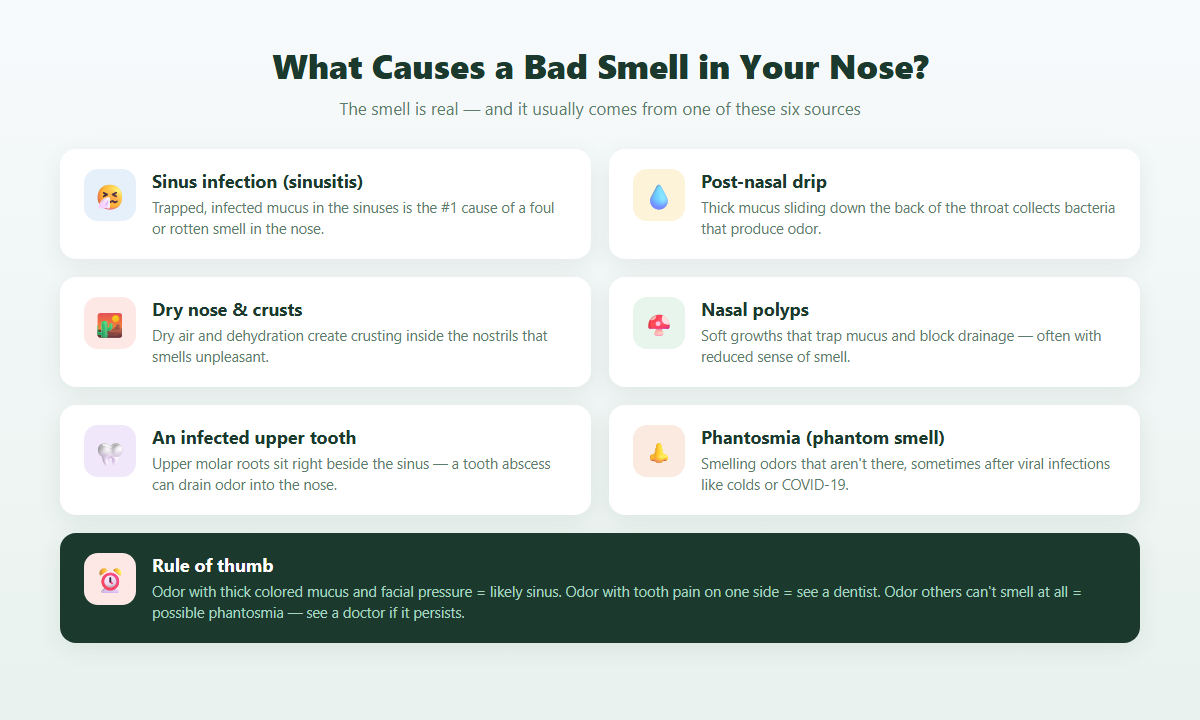
When your sinuses get inflamed — from a cold, allergies, or bacteria — mucus gets trapped instead of draining. Stagnant mucus breeds bacteria, and bacteria produce odor. If your bad smell comes with facial pressure, thick yellow or green discharge, and congestion, sinusitis is the likely culprit, and the natural remedies below are exactly what doctors recommend as first-line care for mild cases.
Post-Nasal Drip
Thick mucus sliding down the back of your throat collects bacteria along the way. You smell it constantly because it’s literally sitting at the junction of your nose and throat.
Dry Nose and Crusting
Air conditioning, winter heating, dehydration, and some medications dry out the nasal lining. The crusts that form have a distinctly unpleasant smell of their own.
Nasal Polyps
These soft, painless growths block normal drainage and trap mucus. A reduced sense of smell alongside the odor is the classic clue. Polyps need a doctor’s diagnosis — natural remedies can ease symptoms but won’t shrink them.
An Infected Upper Tooth — the Cause Nobody Suspects
Here’s the one most people miss: the roots of your upper back teeth sit directly beneath (and sometimes inside) the floor of your maxillary sinus. An abscessed or infected upper molar can drain bacteria straight into the sinus — a condition called odontogenic sinusitis — producing a persistent foul smell in the nose that no amount of nasal rinsing will fix. The giveaway pattern: the smell is on one side only, and it comes with a tender or aching upper tooth, pain when chewing, or gum swelling on that same side. Gum infections can feed the same problem, which is why treating gum trouble early matters — we’ve covered the warning signs in our guide to catching and treating gum disease early. If this pattern sounds like you, the fix is dental, not nasal — book a dental exam before spending weeks on home remedies aimed at the wrong target.
Phantosmia (Phantom Smells)
Sometimes the nose is clean but the smell is still there — because it’s a phantom odor generated by the smell nerves themselves, often after a viral infection like a cold, flu, or COVID-19. Phantom smells usually fade over weeks to months, but persistent cases deserve a medical evaluation.
How to Get Rid of Bad Smell in Nose Naturally: 9 Remedies
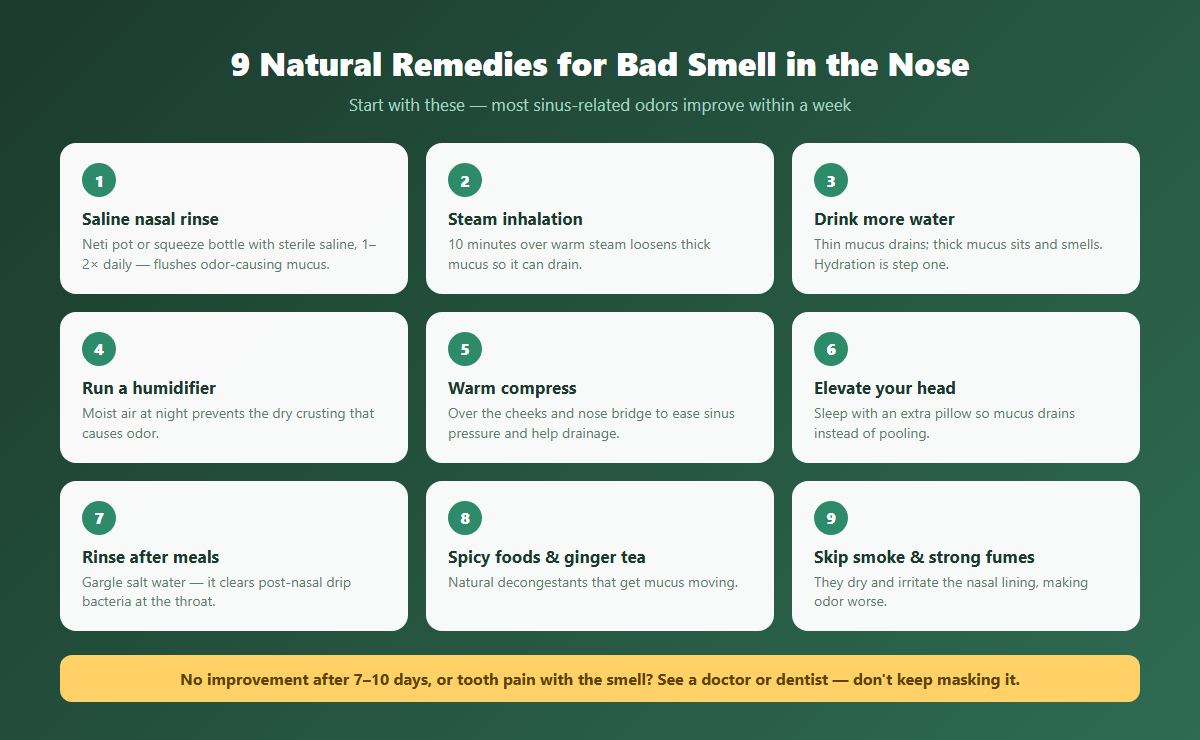
- Saline nasal rinse. The single most effective natural remedy. Use a neti pot or squeeze bottle with sterile or previously boiled (then cooled) water and a saline packet, once or twice daily. It physically flushes out the odor-causing mucus and bacteria. Never use plain tap water directly.
- Steam inhalation. Lean over a bowl of hot (not boiling) water with a towel over your head for 10 minutes, once or twice a day. Steam loosens thick mucus so your sinuses can finally drain. A hot shower works too.
- Drink more water. Thin mucus drains; thick mucus sits and smells. Aim for steady hydration through the day — it’s the simplest fix on this list.
- Run a humidifier at night. Moist air prevents the dry crusting that causes odor, especially in air-conditioned or heated rooms.
- Apply a warm compress. A warm, damp towel over your cheeks and the bridge of your nose eases sinus pressure and encourages drainage.
- Elevate your head while sleeping. An extra pillow keeps mucus draining overnight instead of pooling in your sinuses until morning.
- Gargle salt water after meals. Half a teaspoon of salt in warm water clears the bacteria-laden mucus of post-nasal drip right where it collects.
- Use natural decongestants. Ginger tea, and spicy foods like chili all get mucus moving. They’re temporary helpers, not cures — but they make the other remedies work better.
- Avoid smoke and strong fumes. Cigarette smoke and harsh chemical fumes dry and inflame the nasal lining, making every cause on this list worse.
Give this routine 7–10 consistent days. Sinus-related odors usually improve noticeably within a week; dryness-related odors often improve within days.
When Natural Remedies Aren’t Enough
See a doctor if the smell persists beyond 10 days despite home care, keeps coming back, or arrives with fever, facial swelling, blood-tinged discharge, or vision changes. See a dentist — not just a GP — if the odor is one-sided and paired with any tooth or gum symptom, because odontogenic sinusitis won’t resolve until the tooth itself is treated. If you’re in the Atlanta area and don’t have a regular dentist, our guide on finding a good dentist in Atlanta will help you choose well. For more practical health guides like this one, browse our Health Tips section.
Frequently Asked Questions
Why do I smell something bad in my nose that no one else can smell?
Either the source is inside your nose or sinuses (trapped mucus, crusts, infection) where only you can detect it, or it’s phantosmia — a phantom smell generated by the olfactory nerves, often after a viral illness. If others can’t smell it and your nose feels clear, phantosmia is more likely.
How long does it take for the bad smell in the nose to go away naturally?
With daily saline rinses, steam, and hydration, mucus-related odors typically improve within 5–10 days. Dryness-related odors can improve in 2–3 days with a humidifier and hydration. Anything persisting past 10 days deserves a professional look.
Can a tooth infection really cause a bad smell in the nose?
Yes — it’s called odontogenic sinusitis. Upper molar roots sit against the maxillary sinus floor, so an abscessed tooth can drain bacteria directly into the sinus. The smell is usually one-sided and accompanied by tooth or gum symptoms, and it resolves only when the tooth is treated.
Is a saline rinse safe to use every day?
Yes, daily use is safe and commonly recommended — just always use sterile, distilled, or previously boiled water, and clean the neti pot or bottle after each use.
Does the bad smell in my nose mean I have bad breath too?
Often, yes — post-nasal drip and sinus infections are common hidden causes of bad breath, because the same odor-producing mucus coats the back of the throat. Treating the nasal cause frequently improves the breath as well.
The Bottom Line
Learning how to get rid of a bad smell in your nose naturally comes down to three things: flush it (saline rinse), loosen it (steam, hydration, humidifier), and drain it (elevation, warm compress). Do all three daily for a week and most sinus- and dryness-related odors will fade. But respect the two red flags: a smell that outlasts 10 days of consistent care, and a one-sided smell paired with tooth pain — the first needs a doctor, the second needs a dentist. Match the fix to the cause, and your nose will be back to noticing pleasant things again.
This article is for informational purposes only and is not a substitute for professional medical or dental advice, diagnosis, or treatment. Always consult a qualified healthcare provider about your symptoms.