
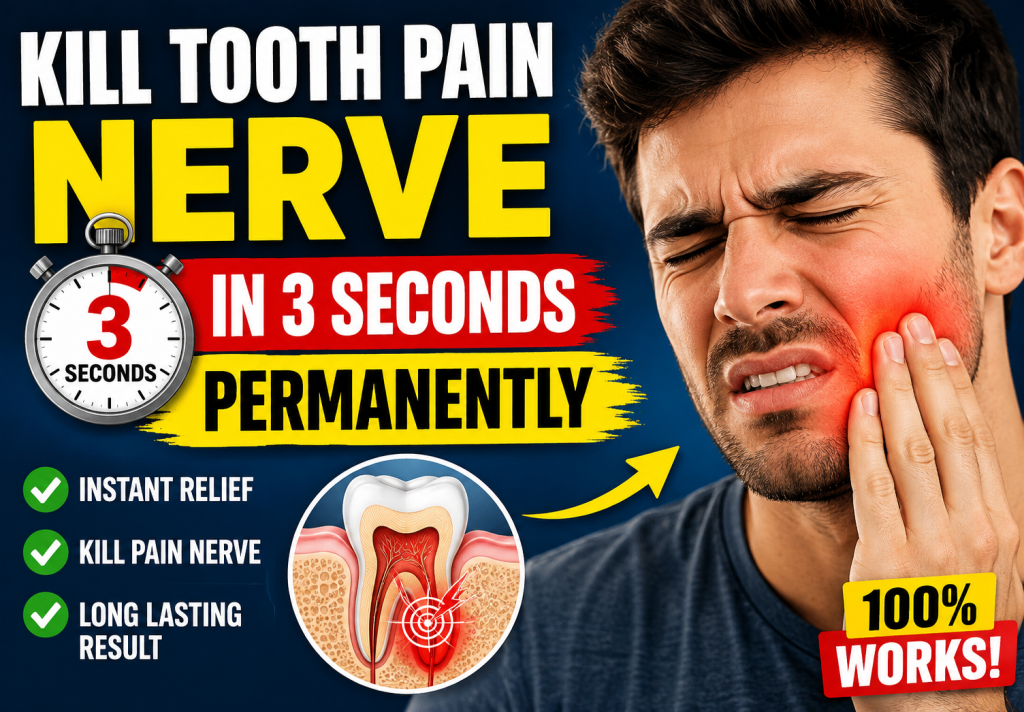
 Kill Tooth Pain Nerve in 3 Seconds Permanently: What Actually Works?
Severe tooth pain can feel unbearable, especially when it comes from an irritated or infected dental nerve. Many people search online for “kill tooth pain nerve in 3 seconds permanently” because they want immediate relief. Unfortunately, there is no safe home remedy that can permanently kill a tooth nerve in three seconds.
Some temporary measures may reduce tooth pain quickly, but permanent treatment usually requires a dentist. Depending on the cause of the pain, treatment may include a filling, root canal treatment, extraction, or another appropriate dental procedure.
The good news is that you do not have to suffer unnecessarily. Understanding why the tooth hurts and what you can safely do while waiting for professional care can make a major difference.
Can You Kill a Tooth Pain Nerve in 3 Seconds?
The short answer is no. There is no scientifically established home method that can permanently destroy a tooth nerve in three seconds.
Tooth pain may occur because the inner pulp of the tooth has become irritated, inflamed, infected, or damaged. The pulp contains nerves and blood vessels. When inflammation or infection affects this area, pain can become intense.
A temporary numbing sensation should not be confused with permanently treating the underlying problem.
If a dental nerve is severely damaged or infected, a dentist may recommend root canal treatment. During this procedure, the dentist removes the inflamed or infected pulp, cleans and disinfects the inside of the tooth, and seals it.
Why Does a Tooth Nerve Hurt So Much?
Tooth nerves are located inside the pulp chamber, which is surrounded by dentin and enamel. When decay, trauma, cracks, or infection reaches the deeper portions of a tooth, the pulp can become irritated.
Common causes of severe tooth nerve pain include:
- Deep tooth decay
- Cracked or fractured teeth
- Dental trauma
- A damaged filling
- Pulp inflammation
- Dental infection
- An abscess
- Gum disease
- Exposed tooth roots
- Severe sensitivity
The pain may feel sharp, throbbing, burning, or constant. Some people experience increased pain when drinking something hot or cold, while others notice pain when biting or lying down.
What Can Relieve Tooth Pain Quickly?
Although there is no three-second permanent cure, several approaches may provide temporary relief.
1. Rinse With Warm Salt Water
A warm salt-water rinse can help clean the mouth and may soothe irritated tissues.
Mix a small amount of salt into a glass of warm water, gently rinse, and spit it out. Do not swallow the solution.
This is a temporary comfort measure rather than a treatment for an infected dental nerve.
2. Use an Over-the-Counter Pain Reliever
Certain over-the-counter pain medicines can temporarily reduce dental pain when used according to their labels and when they are safe for the individual.
Always follow the package directions. If you have medical conditions, take other medications, are pregnant, or are unsure whether a particular medicine is appropriate, ask a pharmacist or healthcare professional.
Pain medicine can make symptoms easier to manage, but it does not remove the cause of tooth nerve pain.
3. Apply a Cold Compress
A cold compress placed against the outside of the cheek may help reduce discomfort and swelling.
Use a cloth between the cold source and your skin. Short applications are generally preferable to keeping extreme cold against the skin continuously.
4. Keep the Area Clean
Food particles trapped around a painful tooth can make discomfort worse. Carefully brush your teeth and gently floss around the affected area.
Avoid aggressive brushing directly over extremely painful or swollen tissues.
Can Clove Oil Kill a Tooth Nerve?
Clove and clove oil are commonly discussed as natural remedies for toothache because clove contains eugenol, a compound with numbing and antimicrobial properties.
However, clove oil should not be considered a permanent treatment for an infected or damaged tooth nerve.
Concentrated essential oils can also irritate or damage oral tissues if used incorrectly. Never deliberately burn, chemically damage, or place caustic substances on a tooth in an attempt to destroy its nerve.
If you choose to use any traditional remedy, discuss it with a dental professional rather than using it as a substitute for treatment.
What Is the Permanent Treatment for Tooth Nerve Pain?
The appropriate permanent treatment depends on the cause.
Root Canal Treatment
If the pulp inside a tooth is irreversibly inflamed or infected, a root canal may be recommended.
During root canal treatment, the dentist:
- Numbs the tooth and surrounding area.
- Creates access to the inside of the tooth.
- Removes damaged or infected pulp.
- Cleans and disinfects the root canals.
- Fills and seals the canals.
- Restores the tooth, often with a filling or crown.
Root canal treatment is designed to eliminate the diseased pulp while allowing the natural tooth to remain in place.
Tooth Extraction
In some cases, a tooth cannot be predictably restored. A dentist may recommend extraction when the tooth is severely damaged, fractured, or otherwise unsuitable for preservation.
Extraction removes the tooth rather than treating it from within. Your dentist can discuss replacement options when appropriate.
Dental Filling
If tooth decay has not reached the pulp, a filling may be sufficient. Treating decay early can help prevent the problem from progressing to severe nerve pain.
How Do You Know If You Need a Root Canal?
Severe tooth pain does not automatically mean that you need a root canal. A dentist normally evaluates your symptoms, examines the tooth, and may use dental X-rays or other diagnostic tests.
Possible signs of significant pulp involvement can include:
- Persistent toothache
- Severe sensitivity to hot or cold
- Pain that continues after the stimulus is removed
- Pain when biting
- Swelling around the tooth
- A darkened tooth
- A recurring dental abscess
- A pimple-like bump on the gum
These symptoms can have different causes, so professional examination is important.
Can Antibiotics Permanently Kill Tooth Nerve Pain?
Antibiotics are not a universal cure for tooth nerve pain.
If there is a bacterial infection with systemic involvement or spreading infection, a dentist or other qualified healthcare professional may prescribe antibiotics when appropriate. However, antibiotics generally do not replace definitive dental treatment for a diseased tooth pulp.
Taking leftover antibiotics without professional guidance is not recommended.
The underlying dental problem may remain even if pain temporarily improves.
What Should You Never Do to a Painful Tooth?
When people experience extreme pain, they sometimes try dangerous methods to “kill” the nerve. Avoid putting harsh chemicals, concentrated substances, or inappropriate medications directly on the tooth or gums.
Do not attempt to:
- Burn the tooth
- Cut the gum
- Drill the tooth yourself
- Apply household chemicals
- Use excessive amounts of medication
- Place aspirin directly against the gums
- Ignore significant swelling or infection
These actions can cause chemical burns, tissue damage, bleeding, or other complications.
When Is Tooth Pain an Emergency?
A severe toothache should be evaluated by a dentist, particularly when it persists or keeps returning.
Seek urgent medical or dental attention if you experience significant facial swelling, swelling around the eye or neck, difficulty breathing, difficulty swallowing, fever with worsening dental symptoms, or rapidly spreading swelling.
These symptoms can indicate a potentially serious infection.
How to Sleep With Severe Tooth Pain
Tooth pain often feels worse at night. While waiting for dental care, you may find temporary comfort by keeping your head elevated rather than lying completely flat.
A cold compress against the cheek may also help temporarily. Follow the directions for any over-the-counter pain medication you use.
Avoid extremely hot, cold, sugary, or hard foods if they trigger your symptoms.
Most importantly, do not use temporary relief as a reason to postpone dental treatment.
Why You Should Treat Tooth Nerve Pain Quickly
A painful tooth can sometimes progress from inflammation to infection. Delaying treatment may allow the problem to become more complicated.
Early dental evaluation can help determine whether the tooth can be treated with a filling or another conservative procedure, or whether root canal treatment or extraction is necessary.
Treating the cause is more reliable than repeatedly trying home remedies to suppress the pain.
Frequently Asked Questions
Can I kill a tooth nerve naturally in 3 seconds?
No. There is no proven natural method that permanently kills a tooth nerve in three seconds. Home remedies may provide temporary comfort but do not reliably eliminate the underlying dental problem.
What kills a tooth nerve permanently?
A dentist can remove diseased or infected pulp during root canal treatment. In cases where the tooth cannot be saved, extraction removes the affected tooth.
How can I stop unbearable tooth pain immediately?
Temporary measures such as an appropriate over-the-counter pain reliever, a cold compress, and a warm salt-water rinse may help. Severe or persistent pain requires dental evaluation.
Does clove oil kill tooth nerves?
Clove oil may provide temporary numbing or soothing effects, but it should not be considered a permanent treatment for diseased dental pulp.
Can a tooth nerve heal itself?
Mild irritation of the dental pulp may sometimes resolve when the underlying cause is addressed early. However, severely inflamed or infected pulp may require professional dental treatment.
Does tooth pain always mean an infection?
No. Tooth pain can result from decay, cracks, trauma, sensitivity, gum problems, exposed roots, or other conditions. A dentist can determine the underlying cause.
Final Thoughts: There Is No Safe 3-Second Permanent Cure
If you searched for “kill tooth pain nerve in 3 seconds permanently,” you are probably looking for immediate relief from intense dental pain. Unfortunately, there is no safe, proven home technique that permanently destroys a tooth nerve in three seconds.
Temporary measures can sometimes make the pain more manageable, but permanent relief comes from treating the underlying dental problem.
If the pain is severe, persistent, recurring, or accompanied by swelling, arrange a dental examination as soon as possible. A dentist can identify the cause and recommend the appropriate treatment, whether that involves a filling, root canal treatment, extraction, or another procedure.
The fastest path to permanent relief is not trying to destroy the nerve yourself—it is getting the painful tooth properly diagnosed and treated by a dental professional.