
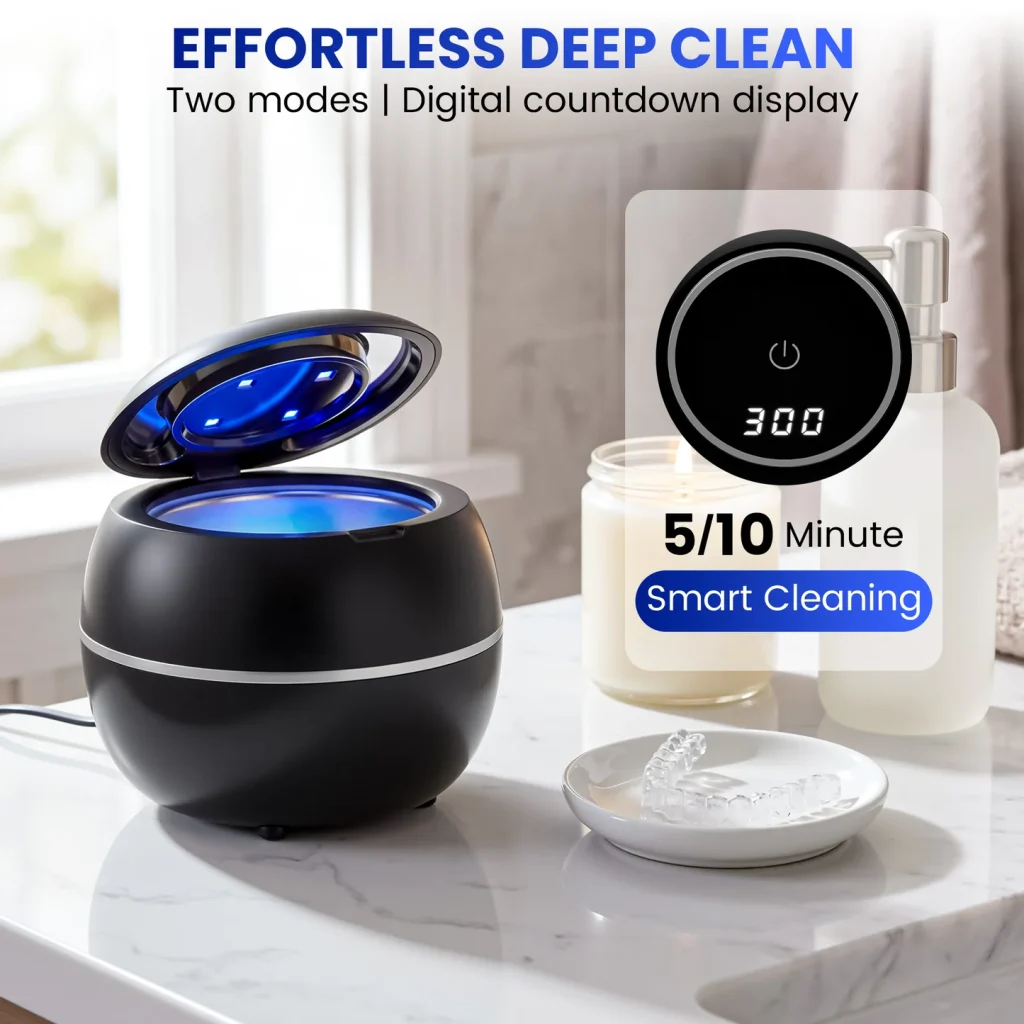
 Selecting an appropriate cleaning device can make removable dental appliance care more convenient for patients who want a consistent routine at home. The growing range of ultrasonic devices also means that users have several designs, cleaning cycles, and features to compare before making a choice. An Ultrasonic Retainer Cleaner can be one option for compatible appliances.
A useful comparison should look beyond marketing claims and focus on practical details. Tank capacity, operating time, controls, portability and compatibility can all affect how well a device fits into individual’s daily routine. These factors become especially relevant when patients use more than one type of removable appliance. An Ultrasonic Cleaner may support the care of compatible retainers, aligners, mouth guards, dentures or other small items. Understanding these differences can help patients make more informed choice without assuming that one device is suitable for every appliance or cleaning requirement.
Oral Hygiene Considerations for Retainer Users
Retainer care can become easier when cleaning is included in an established daily routine. Patients who wear removable orthodontic appliances can consider how easily a cleaning method fits around their normal schedule. Simple and consistent care may also make appliance maintenance easier to manage. An Ultrasonic Retainer Cleaner provides an additional cleaning option for compatible retainers. Ultrasonic devices use vibration through liquid to create movement around submerged surfaces. This process may help loosen certain types of surface material without depending entirely on manual cleaning.
The appropriate method depends on retainer’s material and care instructions. Patients should not assume that every retainer can tolerate same water temperature, cleaning solution or ultrasonic cycle. Manufacturer guidance should always be checked before use. Proper handling is also important during everyday retainer care. Retainers should be stored according to their specific instructions and checked regularly for visible damage. If retainer changes in fit or becomes uncomfortable then patients should contact their dentist or orthodontist for appropriate advice.
Ultrasonic Cleaning Mechanisms in Dental Care
An Ultrasonic Cleaner works by sending high-frequency sound waves through a liquid. These waves create pressure changes within the water. Under suitable conditions, microscopic bubbles can form and collapse, creating movement throughout the cleaning liquid. This mechanical activity may help loosen food debris and other surface material from compatible submerged items. It can be useful around curves, edges, and smaller areas where direct manual access may be less convenient during routine cleaning.
Cleaning performance can vary according to the appliance material, water conditions, cycle duration, and type of residue. An ultrasonic device should therefore not be expected to produce identical results for every dental appliance. A Retainer cleaner machine should be viewed as a cleaning tool rather than a treatment for an oral condition. It should also not automatically be described as a sterilization device. Patients should follow the manufacturer’s instructions and use only compatible appliances.
What Features Define the Best Ultrasonic Retainer Cleaner?
The best Ultrasonic Retainer Cleaner depends on the user’s appliance and cleaning routine. No single specification makes a device suitable for every patient. Capacity, cleaning duration, controls, portability, and compatibility can all influence the overall experience.
| Dental Cleaner | Key Specifications & Features | Cleaning Options | Practical Application |
| Ultrasonic Cleaner: Dental Cleaning Pod (2026 Model) | Ultrasonic vibration cleaning; up to 300 ml capacity; one-touch operation; compact and portable design; multiple colour and plug options | 5- and 10-minute cleaning cycles | Retainers, dentures, aligners, mouth guards, night guards, jewellery, watches, and other small personal items |
| Zima Dental Pod | 42 kHz ultrasonic technology; designed specifically for dental and oral appliances | 5-minute automatic cleaning cycle | Dental appliances, including retainers and other oral appliances |
| iSonic DS180 | 36–41 kHz frequency; 25 W full-wave ultrasonic power; detachable power adapter | 3-minute automatic shutoff | Retainers, dentures, aligners, mouth guards, and small jewellery |
| Sonic Dental Sonic Spa Pro | 43 kHz ultrasonic cleaning; UV-C technology | 3- and 5-minute cleaning modes | Aligners, retainers, night guards, dentures, and toothbrush heads |
The competing models each have their own strengths. Zima Dental Pod focuses on dental and oral appliances. iSonic DS180 provides detailed technical specifications for users who want to compare ultrasonic features. Sonic Dental Sonic Spa Pro combines ultrasonic cleaning with a UV-C feature. The Ultrasonic Cleaner: Dental Cleaning Pod (2026 Model) offers a broader combination of practical features. Its up to 300 ml capacity, two cleaning cycles, one-touch operation, compact design, and multiple applications provide flexibility for compatible items. It can be used with retainers, dentures, aligners, mouth guards, night guards, jewellery, watches, and other small personal items.
For users comparing these models, the right choice still depends on their particular appliance and routine. The Dental Cleaning Pod takes our best overall position because its combination of capacity, cleaning flexibility, simple operation, portability, and versatility provides a practical balance.
Biofilm Accumulation on Removable Orthodontic Appliances
Removable orthodontic appliances are repeatedly exposed to oral environment. As a result, surface material can accumulate over time. The amount and type of buildup can differ between patients based on wearing habits, diet, cleaning frequency and appliance design. An ultrasonic cleaning cycle may help loosen some surface material from compatible orthodontic appliances. However presence of biofilm should not be used to make unsupported claims about disease prevention or treatment. Ultrasonic cleaning is primarily mechanical cleaning process.
Patients should focus on maintaining a consistent appliance-care routine rather than waiting for heavy buildup to develop. The recommended cleaning method can vary between appliances. Manufacturer instructions should determine which cleaning products, solutions and methods are appropriate. If persistent deposits remain after following the recommended care instructions, patients can seek advice from dental professional. Professional guidance may also be appropriate when appliance becomes damaged, uncomfortable, discoloured or no longer fits correctly.
Ultrasonic Denture Cleaner for Prosthetic Hygiene
Denture care requires regular attention because removable prosthetic appliances can collect food particles and surface residue during everyday use. Their shape can also include contours and areas that require careful cleaning. Patients can therefore consider different cleaning methods based on their denture type. An Ultrasonic Denture Cleaner provides additional cleaning option for dentures that are confirmed to be compatible with ultrasonic cleaning. Ultrasonic vibration creates movement through cleaning liquid and may help loosen material from submerged surfaces.
Not every denture should automatically be cleaned in same way. Materials, construction and manufacturer recommendations can differ. Patients should check specific care instructions before using an Ultrasonic Cleaner with denture or other prosthetic appliance. An Ultrasonic Denture Cleaner should be considered part of overall denture-care routine. It does not replace professional dental examinations or advice. Persistent deposits, changes in fit, damage or discomfort should be discussed with qualified dental professional.
Selecting a Retainer Cleaner Machine for Home Care
The selection of Retainer cleaner machine for home use involves more than comparing technical specifications. Patients should first consider the type of appliance they own and whether device is suitable for that specific material. The intended frequency of use can also influence which features are most useful. Patients can also consider how easy the controls are to operate and whether tank provides enough space for comfortable cleaning. Storage requirements may matter in smaller bathrooms or shared spaces. For people who travel frequently, a compact design may be easier to carry and store.
When comparing a home device, the following practical factors can be useful:
- Appliance compatibility
- Cleaning controls
- Tank design
- Storage needs
- Travel convenience
These considerations can help patients choose a Retainer cleaner machine that fits their routine without relying on unsupported performance claims. An Ultrasonic Retainer Cleaner should complement appropriate appliance care rather than replace professional guidance or manufacturer instructions.
Conclusion
The selection of an Ultrasonic Retainer Cleaner involves considering complete combination of features rather than focusing on one specification. Capacity, cleaning options, usability, portability and appliance compatibility can all influence whether device suits patient’s routine.
The Ultrasonic Cleaner: Dental Cleaning Pod (2026 Model) is our preferred choice in this comparison. Its up to 300 ml capacity, 5- and 10-minute cleaning cycles, one-touch operation, compact design and multiple applications provide practical combination for compatible retainers and other small personal items.
An Ultrasonic Denture Cleaner may also be considered for compatible removable prosthetic appliances. An Ultrasonic Cleaner can provide another option for routine appliance care while patients should always follow manufacturer instructions and consult dental professional when an appliance has persistent problems, damage, discomfort, or changes in fit.