
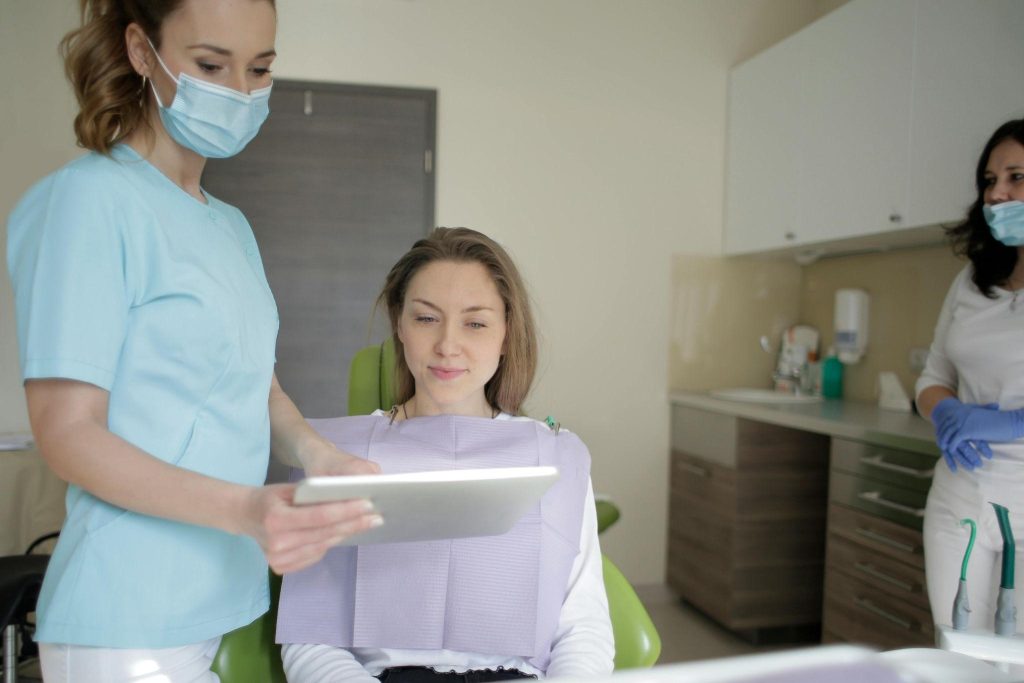
 All-on-4 has changed what is possible for people who have lost most or all of their teeth. In a single appointment, four implants are placed in each arch and a full set of fixed teeth is attached, often the same day. It is a genuine alternative to traditional dentures, and for many patients it restores the ability to eat, speak, and smile with confidence. But the surgery is only the beginning. What happens over the following days and months determines how well your new teeth settle in.
Most people walk into the procedure with a clear picture of the result and almost no picture of the recovery. That gap causes unnecessary worry, because normal healing can include swelling, soreness, and a long stretch of soft foods that nobody warned them about. Knowing what is normal, and what is not, makes the entire process calmer and helps you protect the investment you just made.
This guide walks through All-on-4 recovery week by week, covers what you can eat and how to manage discomfort, and answers the questions patients ask most.
What happens immediately after All-on-4 surgery?
Immediately after All-on-4 surgery, you will usually leave the office the same day with a temporary fixed set of teeth already in place. Because the implants are positioned to maximize stability, many patients receive an immediate-load provisional bridge, which means you do not go home toothless. You will feel numb at first, and as the anesthesia wears off, mild to moderate soreness sets in.
The first day is about rest and protection. Expect some bleeding or oozing, which is normal, and plan to keep your head slightly elevated and apply ice in intervals to control swelling. You will not be driving yourself home, and you should have someone with you for the first 24 hours. This is not the day to test your new teeth or your willpower. It is the day to sleep, hydrate, and let the healing begin.
What does All-on-4 recovery look like week by week?
All-on-4 recovery follows a fairly predictable arc: a few intense days, a couple of manageable weeks, and then several quiet months while the implants fuse to the bone. Here is how it typically unfolds.
The first 72 hours
Swelling and bruising usually peak around 48 to 72 hours, not on the day of surgery, so do not be alarmed if you look worse on day three than day one. Stick to a liquid and very soft diet, take medications as prescribed, and use ice during the first day or two. Rest is the priority. Avoid spitting, using straws, or anything that disturbs the surgical sites.
Week one
By the end of the first week, the worst of the swelling and soreness begins to fade. Many patients return to desk work within a few days, though everyone heals at their own pace. You will still be on soft foods, and gentle saltwater rinses help keep the area clean. Your provider may schedule a follow-up around this time to check the sites.
Weeks two through four
This is the steady-improvement phase. Most visible swelling is gone, discomfort is minimal, and daily life returns to normal. Your teeth are functioning, but the implants underneath are still fusing to the bone, so you continue to eat softer foods and avoid anything hard or crunchy that could stress the sites.
Months three through six
This is the osseointegration phase, when the bone fully bonds with the implants. It is mostly invisible and uneventful. You gradually reintroduce firmer foods as your provider clears you, and the foundation for your final teeth becomes solid.
Final teeth
Once integration is complete, usually around four to six months, your temporary bridge is replaced with your permanent, custom prosthesis. This is the result you were waiting for: a durable, natural-looking set of teeth built to last.
For a deeper, stage-by-stage breakdown including healing milestones and warning signs to watch for, this detailed All-on-4 recovery timeline is a useful companion to keep on hand.
[Image: A week-by-week recovery timeline graphic showing healing stages from surgery day to final teeth]
What can you eat during All-on-4 recovery?
During All-on-4 recovery, you eat soft, then softer-firm, then firm, progressing over weeks and months as healing allows. Pushing this timeline is one of the most common mistakes patients make, and it can put your implants at risk before they have fully fused.
In the first week, think liquids and purees: smoothies, blended soups, yogurt, mashed potatoes, applesauce, and protein shakes. Nutrition matters more than usual right now, because your body is healing, so do not simply skip meals because chewing feels limited.
Through weeks two to four, you can add scrambled eggs, soft pasta, flaked fish, and well-cooked vegetables. Across the osseointegration months, you reintroduce firmer foods gradually as your provider clears you. Hard, crunchy, sticky, and chewy foods, things like nuts, hard bread crusts, and tough meats, stay off the menu longest, because they create the kind of force that can disturb integrating implants.
How do you manage pain and swelling after All-on-4?
Pain and swelling are managed with prescribed medication, cold compresses, head elevation, and rest, and for most patients they are very manageable. Discomfort is usually described as soreness rather than sharp pain, and it responds well to the medication your provider gives you.
A few practical habits make a real difference:
- Use ice on the cheeks in 15-to-20-minute intervals during the first 48 hours
- Keep your head elevated, even while sleeping, for the first few nights
- Take medications on schedule rather than waiting for pain to build
- Rinse gently with warm saltwater after the first day to keep sites clean
- Avoid smoking and alcohol, which slow healing and raise the risk of complications
Call your provider if you experience worsening pain after the first few days, swelling that increases rather than decreases past the 72-hour mark, fever, or any sign that does not match the normal arc described above. Normal recovery steadily improves. Anything moving in the wrong direction deserves a phone call.
How much does All-on-4 cost, and is it worth it?
All-on-4 typically costs between $20,000 and $35,000 per arch in the United States, with premium materials and complex cases pushing higher. Full-mouth treatment, both arches, often falls between $40,000 and $60,000 or more. The price reflects the implants, the surgery, the temporary teeth, and the final custom prosthesis, which is why it sits well above traditional dentures.
Whether it is worth it depends on what you are comparing it to. Traditional dentures cost less upfront but sit on the gums, can slip, and do nothing to slow the bone loss that follows tooth loss. All-on-4 replaces the root structure, stays fixed in place, and functions much more like natural teeth. For many patients, the long-term function and quality of life justify the investment.
Because the final number depends heavily on your specific case, it helps to set expectations before you sit down with a provider. You can check typical All-on-4 dental implants cost ranges for your situation, compare All-on-4 implant costs by state, and use a tool to see your new smile before you commit.
[Image: A confident older woman smiling with her new fixed full-arch teeth after All-on-4 treatment]
Frequently asked questions about All-on-4 recovery
How long does it take to fully recover from All-on-4?
Initial recovery takes about one to two weeks, when you return to normal daily activities. Full healing, when the implants completely fuse to the bone and your permanent teeth are placed, takes about four to six months.
Will I have teeth right after surgery?
In most cases, yes. All-on-4 is designed for immediate loading, so you typically leave the same day with a temporary fixed bridge while your implants heal underneath.
When can I eat normally again?
You progress from liquids to soft foods to firmer foods over several months. Most patients are cleared for a fully normal diet once osseointegration is complete and the final teeth are placed.
Is All-on-4 painful?
Most patients report soreness rather than severe pain, and it is well controlled with prescribed medication, ice, and rest. Discomfort steadily decreases after the first few days.
How do I find a qualified All-on-4 provider?
Look for a provider with specific full-arch implant training, 3D imaging for planning, and a clear, itemized treatment plan. Comparing providers by credentials and location through the independent Dental Implant Directory is a practical way to vet your options before committing.
The Bottom Line
All-on-4 recovery is predictable when you know what to expect: a few intense days, a couple of manageable weeks, and several quiet months of healing before your final teeth go in. Respect the soft-food timeline, manage swelling early, and watch for anything that moves in the wrong direction. Do that, and you give your new smile the best possible start. When you are ready to compare qualified providers, the Dental Implant Directory is a free, independent place to begin.