
 Living with extensive tooth loss affects far more than appearance. Chewing becomes harder, speech can feel less natural, and confidence often takes a hit during routine interactions. For years, full-arch tooth replacement used to rely heavily on removable options that came with ongoing frustrations. Today, all on 4 dental implants offer a fixed, modern approach designed to restore function and stability while protecting long-term oral health.
This treatment approach is often recommended for people who have lost most or all teeth in one or both arches. It’s also considered for those who struggle with loose dentures or ongoing jawbone loss. Understanding how the process works, who it’s for, and what to expect can help you decide if it aligns with your goals.
Understanding the All on 4 Treatment Concept
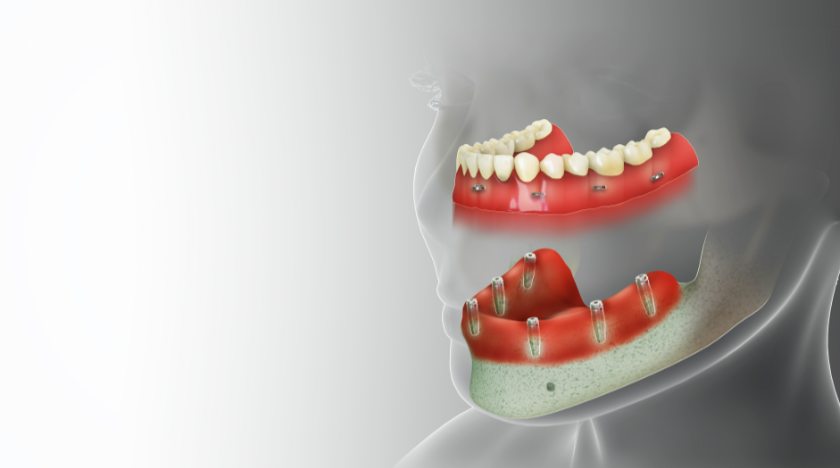
Under the all-on-4 treatment concept, four dental implants are used to anchor a full-arch restoration. Rather than restoring each missing tooth, implants are positioned within the jawbone to anchor a single fixed bridge. The front implants are placed vertically, while the back implants are angled to take advantage of available bone and improve overall support.
This design reduces the need for bone grafting in many cases. Patients who were previously told they weren’t candidates for implants may qualify due to this approach. Strategic implant placement also helps distribute bite forces evenly, which supports jawbone health over time.
Because fewer implants are used, treatment planning focuses heavily on precision. Advanced imaging technology, like CT scans and CBCT scans, allows providers to evaluate bone density, nerve placement, and sinus areas before implant placement begins.
How All on 4 Implants Improve Daily Function
One of the biggest advantages of all on 4 dental implants is how they restore function quickly and reliably. A fixed bridge anchored to implants doesn’t shift while chewing or speaking. The resulting stability and, thus, stronger bite with implants allow you to enjoy foods that are often off limits with conventional dentures.
Implant dentures also help preserve the jawbone. Tooth loss leads to jawbone loss over time because the bone no longer receives stimulation. Titanium dental implants act as artificial tooth roots, encouraging bone maintenance and reducing facial collapse associated with long-term edentulous patients.
Speech often improves as well. Because the prosthetic bridges are fixed in place, there’s no movement against the gums or palate. That consistency makes pronunciation easier and reduces clicking sounds common with removable options.

Who Is a Candidate for Full-Arch Restoration
All on 4 dental implants are often recommended for patients with advanced tooth loss or failing teeth that require removal. People who have struggled with denture stability or discomfort may also be good candidates. In many cases, patients with some degree of jawbone loss can still qualify due to angled implants and careful planning.
A comprehensive evaluation is required. This includes reviewing medical history, oral health status, and lifestyle factors. Tobacco products can interfere with healing and long-term implant success, so usage may affect eligibility.
Imaging, such as cone beam CT scan, digital radiographs, and 3D scanners, helps determine bone quality and implant positioning. In certain cases, sinus lifts or limited bone grafting may still be needed, though far less frequently than with traditional full-mouth dental implants.
What the Dental Implant Procedure Involves
The dental implant procedure begins with detailed treatment planning. Imaging data is often combined with virtual reality software to map implant placement digitally before surgery. A surgical guide may be created to ensure precise positioning during the procedure.
Local anesthesia or local anesthetic is commonly used, though sedation options may be available depending on individual needs. During surgery, four implants are placed into the jawbone. Any remaining damaged teeth may be removed at the same appointment.
One of the defining features of this approach is immediate loading. A temporary restoration or temporary prosthesis is often attached the same day or shortly after surgery. This allows you to leave with functional teeth while the healing process begins.
Temporary and Permanent Restoration Phases
After implant placement, a temporary restoration protects the implants and allows you to function during healing. This temporary prosthesis is designed to minimize pressure while the implants integrate with the bone.
The healing process typically lasts several months. During this time, implants fuse with the jawbone through a process called osseointegration. Maintaining dental hygiene during this phase is critical to long-term success.
Once healing is complete, the temporary restoration is replaced with a custom, permanent set of replacement teeth that’s crafted for durability, comfort, and appearance. The final fixed bridge is designed to function like natural teeth and remain securely attached.
Long-Term Oral Health and Maintenance
All on 4 dental implants support long-term oral health when properly maintained. Daily cleaning around the prosthetic bridges helps prevent inflammation and infection. Regular dental check-ups and professional cleanings allow early detection of any issues.
Unlike conventional dentures, implant-supported restorations don’t rest on the gums alone. This reduces sore spots and supports jawbone health over time. Proper care also protects surrounding tissues and prolongs the lifespan of the implants.
While dental implant cost is often higher upfront than removable options, the durability and reduced need for replacements can make it a long-term investment in function and comfort.
Takeaway
All on 4 dental implants offer a stable, efficient solution for full-arch restoration when tooth loss has affected daily life. By using strategic implant placement, this approach restores function while supporting jawbone health. You gain fixed teeth that look natural and stay secure during eating and speaking. With proper planning, care, and maintenance, this treatment can provide lasting comfort and confidence for years to come.